|
|
|
STORY
DETAILS |
 |
|
| |
| |
|
| Cover Story
|
|
 |
| Textiles’ – the word brings up images of beautiful drapes – cotton, silk, chiffon, lace. Whether it is the material draped on the figurine of the lady f... |
|
|
| |
read more... |
|
|
|
Lead Article
Textiles the word brings up images of beautiful drapes cotton, silk, chiffon, lace. Whether it is the material draped on the figurine of the lady from Mohenjadaro, the stylish drapes of Cleopatra, the ball dance gowns of the Victorian Era or the lovely dresses worn by our own queens and princesse...
read more... |
|
|
| Articles |
|
|

|
|
Tapping Sustainable Energy Alternatives
|
|
|
The second lead article, which is also focus article, is written by Shri N Bhadran Nair. Citing a report of the World Health Organisation, the author has advocated for tapping sustainable energy alternatives
|
|
|

|
|
|

|
|
Financing Renewables in India
|
|
|
The third article is written by Shri P C Maithani, Adviser, Ministry of New and Renewable Energy. He has focussed on renewable energy resources
|
|
|
|
|

|
|
Steps to Achieve India’s Solar Potential
|
|
|
The special article is written by Sumant Sinha, Chairman and Managing Director of ReNew Power. He opines that India must also honour its global commitments on curbing greenhouse gas emissions
|
|
|
|
|
|
|
|
|
|
|
|
|
Democratic Control over Natural Resources |
|
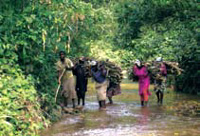 On December 18, 2006 , Parliament unanimously passed the Scheduled Tribes and Other Traditional Forest Dwellers (Recognition of Forest Rights) Act, 2006. This is not just another law. In the years that preceded its passage, and in the year since, On December 18, 2006 , Parliament unanimously passed the Scheduled Tribes and Other Traditional Forest Dwellers (Recognition of Forest Rights) Act, 2006. This is not just another law. In the years that preceded its passage, and in the year since,
this law has been attacked as a move to “privatise forests”, to destroy the country’s remaining tigers and as a “welfare measure” by politicians seeking “vote banks.” One author even described it as the “most dangerous law passed since 1947.” After it was notified into force on December 31, 2007 a full year after it was passed – newspapers called it the most controversial law in India’s recent history. But in reality this law does not distribute land or land rights to anyone; it will not “ privatise the forests”, and it certainly will not result in the extinction of India’s tigers. Rather, encapsulated in this legislation, and in the fight that was fought over its every word and every clause, is the story of the struggle over the livelihoods of India’s poorest people and the fight to establish democratic control, to whatever small extent, over the resources and the forests of this nation. To understand how this occurred, and how and why ‘conservation’ has become a term behind which a large number of vested interests have come to hide, we need to first understand the history of India’s forest laws. India’s Forest Laws For more than a century now, the forests of India have been governed under the provisions of the Indian Forest Acts, a series of which were passed from 1876 to 1927. The 1927 Act remains India’s central forest legislation. The purpose of these Acts had nothing to do with environmental conservation.
|
|
|
|
|
|
|
|
|
|
|
|
|
Regional Languages
|
|
|
|
|
|
Regular
Column |
|
J&K Window : |

|
|
Do you know? : What is Forensic Auditing |
|
Forensic auditing refers to the auditing with the main aim to employ accounting techniques and methods to gather evidence to investigate the crimes on financial front such as theft, fraud etc.
|
|
|
|
|
|
|